“Lion!”
“Stop!”
“Don’t. Move. Do. Not. Move.”
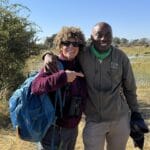
Basta, our normally soft-spoken and practical-joker Botswanan safari guide, vehemently whispered those words. By a stroke of magnificent fortune, the moment he said “lion!” I raised my binoculars to my eyes. The urgency and force with which Basta’s said “don’t move” had me utterly frozen (and in full transparency, hoping I did not peepee myself).
We were on a walking Safari in the bush of the Okavango Delta. 100 feet in front of us, a male lion seemingly vaporized out of the grassland and bushes.
Each time we went on a walking safari with Basta, he started with a security briefing whose general theme was: when confronted with wildlife, do not run! The security briefing went like this: you will know elephants are angry when they shake their ears and stomp their feet and raise a bunch of dust. If they charge, their charge is likely a bluff charge. Don’t run. Lions will often bluff charge. You will know they are angry when they stare you down and crouch and growl. Don’t run. The buffalo “he only charges once” (meaning no bluff charge). If it charges, drop to the ground. Don’t run. And then, and this has become my favorite line of all time and flowed through my head on repeat as we walked in the bush, he would end every lecture with, “remember, in de bush, don’t run…….until I tell you…..to run.”
But this “don’t move” edict was new. My entire body FELT the urgency.
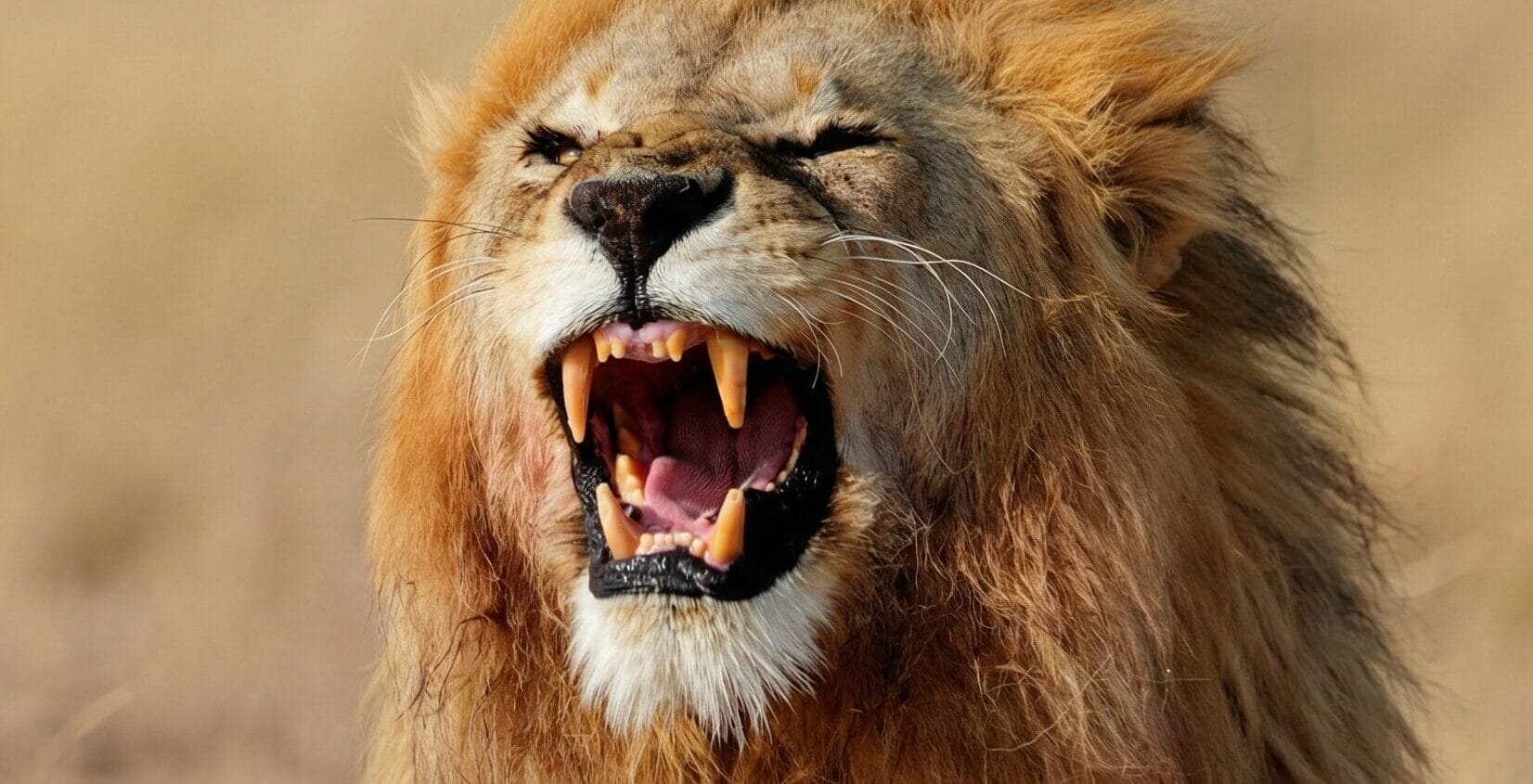
100 feet from an African lion is damn close. Feels close. Is close. The lion stopped. He stared. He growled. And then he charged. Right at us.

The Business Lesson: The Difference Between a Threat and a Flaw. A “bluff charge” is a gift. It’s a loud, terrifying signal that if you don’t change course, the real danger is next.
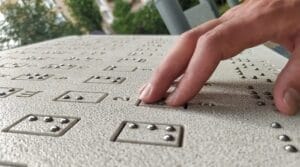
For websites, an accessibility audit is your bluff charge. When a report shows missing alt-text or keyboard traps or that the site can’t be navigated without a mouse, it’s a warning. It’s not a lawsuit yet. It’s not a threat to your sustainability commitment yet. But it’s the lion stomping its feet and growling. Many companies ignore these warnings because they don’t see the “lion” in the grass. For sustainable brands, ignoring them leads to the real danger—a lawsuit, a damaged reputation, or alienating a significant portion of your customer base. Fix the flaws while they are still just “bluff charges”.
But back to the bush… I was frozen with my binoculars up to my eyes. The lion was mid-sprint, closing the distance, growl vibrating the bush.
The story continues: What happens when you look directly into the golden eyes of a predator? (And why you need a guide you can trust).